
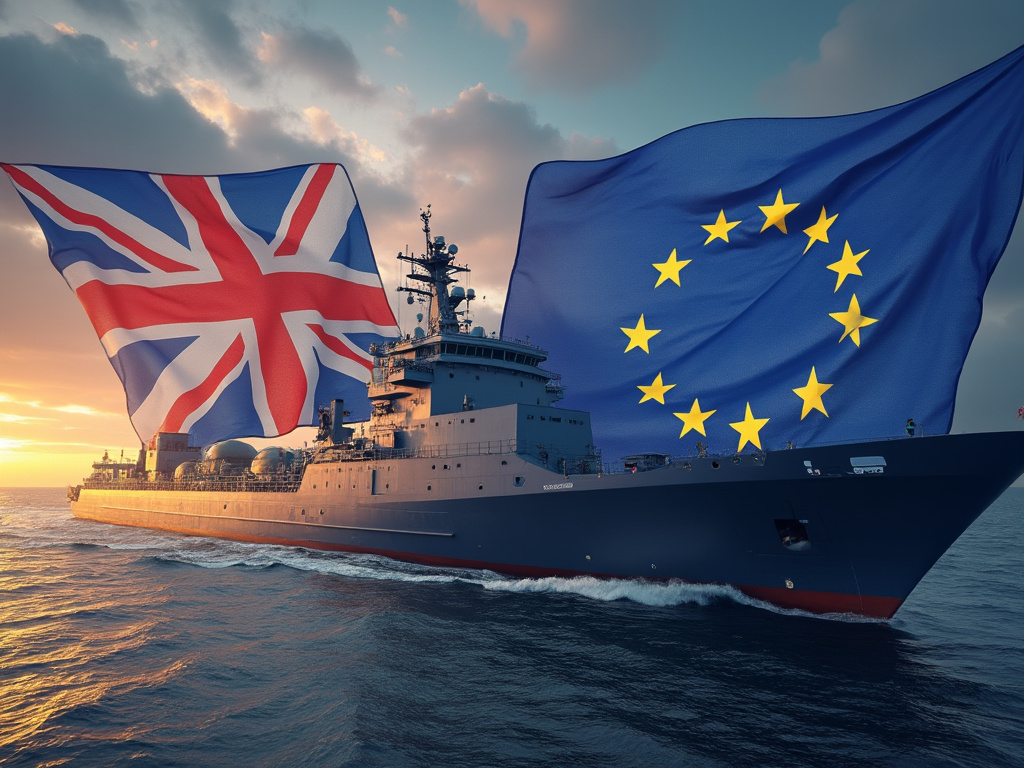
EU and UK Formalize Defence Pact Amid Global Security Challenges
The EU and UK sign a security and defence partnership, setting the stage for closer military collaboration and enhanced economic ties in the face of geopolitical pressures.
LONDON – The European Union (EU) and the United Kingdom (UK) have signed a significant defence and security pact in London, marking a pivotal moment in post-Brexit relations between the two entities.
This agreement is expected to facilitate joint military exercises, enhance dialogue on cybersecurity, and potentially pave the way for UK firms to participate in EU defence procurement initiatives.
British Prime Minister Keir Starmer, who has emphasized the need to reset the UK's relationship with the EU, framed this pact as a key element of his agenda since his election campaign last summer.
The pact reflects a broader awakening within the UK about the EU's role in shaping European defence, particularly in light of the diminishing security umbrella traditionally provided by the United States.
The deal mirrors aspects of a proposed security agreement from 2019, which was overshadowed by contentious negotiations regarding post-Brexit trade terms.
At that time, the UK's emphasis on diverging from EU norms hindered progress on defence cooperation.
However, shifting global dynamics, accentuated by heightened geopolitical tensions, have fostered renewed political will on both sides to deepen their security relationship.
The pact also aligns with the EU's ambitious plans to bolster its own defence capabilities through a €150 billion loan programme known as the Security Action for Europe (SAFE).
Under the terms of the agreement, UK defence firms could gain access to this procurement scheme, provided that the UK agrees to financial contributions and other terms.
Key players in the EU, including European Commission President Ursula von der Leyen and European Council President António Costa, hailed the pact as a historic step towards maritime and industrial collaboration, emphasizing the need for European unity in the face of insecurity.
As a first measure, the EU has committed to extending fishing rights in UK waters until 2038 and has included provisions for deeper cooperation in military mobility, space, and cybersecurity.
The agreement comes amidst a backdrop of intensified cooperation among NATO allies, particularly following the Russian invasion of Ukraine, with the UK taking a lead role in training Ukrainian military personnel and spearheading discussions on post-conflict military presence.
Despite the optimism surrounding the pact, significant challenges remain, particularly in terms of legal and operational integration.
While the defence pact offers a foundation for future cooperation, it does not automatically resolve existing tensions, such as the UK's previous requests to join EU-led military mobility programmes.
The discussions leading up to the agreement involved negotiations around sensitive issues such as food trade, energy cooperation, and youth mobility, with a focus on balancing UK concessions and EU assurances.
Notably, the pact reaffirms commitments to the principles outlined in the Brexit divorce deal and emphasizes the need for compliance with prior agreements.
The negotiation process has also witnessed the introduction of additional criteria that regulate the participation of non-EU countries in the defence procurement scheme, indicating a strategic approach to collaboration while safeguarding EU interests.
As the agreement unfolds, ongoing dialogue will be essential to address remaining complexities, ensuring adherence to established frameworks, and fostering a collaborative environment for both parties amidst evolving geopolitical challenges.
This agreement is expected to facilitate joint military exercises, enhance dialogue on cybersecurity, and potentially pave the way for UK firms to participate in EU defence procurement initiatives.
British Prime Minister Keir Starmer, who has emphasized the need to reset the UK's relationship with the EU, framed this pact as a key element of his agenda since his election campaign last summer.
The pact reflects a broader awakening within the UK about the EU's role in shaping European defence, particularly in light of the diminishing security umbrella traditionally provided by the United States.
The deal mirrors aspects of a proposed security agreement from 2019, which was overshadowed by contentious negotiations regarding post-Brexit trade terms.
At that time, the UK's emphasis on diverging from EU norms hindered progress on defence cooperation.
However, shifting global dynamics, accentuated by heightened geopolitical tensions, have fostered renewed political will on both sides to deepen their security relationship.
The pact also aligns with the EU's ambitious plans to bolster its own defence capabilities through a €150 billion loan programme known as the Security Action for Europe (SAFE).
Under the terms of the agreement, UK defence firms could gain access to this procurement scheme, provided that the UK agrees to financial contributions and other terms.
Key players in the EU, including European Commission President Ursula von der Leyen and European Council President António Costa, hailed the pact as a historic step towards maritime and industrial collaboration, emphasizing the need for European unity in the face of insecurity.
As a first measure, the EU has committed to extending fishing rights in UK waters until 2038 and has included provisions for deeper cooperation in military mobility, space, and cybersecurity.
The agreement comes amidst a backdrop of intensified cooperation among NATO allies, particularly following the Russian invasion of Ukraine, with the UK taking a lead role in training Ukrainian military personnel and spearheading discussions on post-conflict military presence.
Despite the optimism surrounding the pact, significant challenges remain, particularly in terms of legal and operational integration.
While the defence pact offers a foundation for future cooperation, it does not automatically resolve existing tensions, such as the UK's previous requests to join EU-led military mobility programmes.
The discussions leading up to the agreement involved negotiations around sensitive issues such as food trade, energy cooperation, and youth mobility, with a focus on balancing UK concessions and EU assurances.
Notably, the pact reaffirms commitments to the principles outlined in the Brexit divorce deal and emphasizes the need for compliance with prior agreements.
The negotiation process has also witnessed the introduction of additional criteria that regulate the participation of non-EU countries in the defence procurement scheme, indicating a strategic approach to collaboration while safeguarding EU interests.
As the agreement unfolds, ongoing dialogue will be essential to address remaining complexities, ensuring adherence to established frameworks, and fostering a collaborative environment for both parties amidst evolving geopolitical challenges.